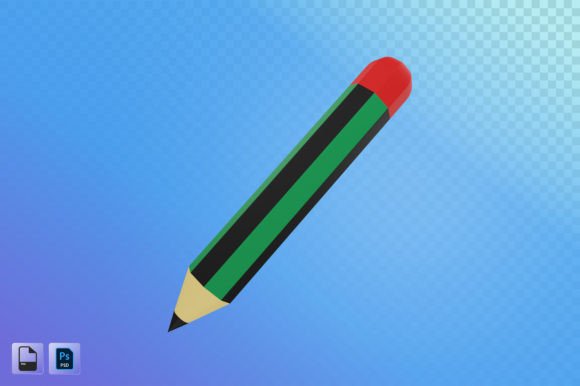
Pencil 3D Illustration for Design Projects
Visual storytelling has become a cornerstone of modern design, whether you're creating an app, designing a website, or preparing marketing materials. Among the many tools available to designers and content creators, Pencil 3D Illustration stands out as a versatile asset that can bring ideas to life with depth, clarity, and artistic flair. These illustrations combine the simplicity and charm of hand-drawn aesthetics with the dimensionality and detail of 3D modeling, making them ideal for a wide range of creative applications.
What Is Pencil 3D Illustration?
A Pencil 3D Illustration is a digital artwork that mimics the look of traditional pencil sketches while incorporating three-dimensional elements. Unlike fully rendered 3D models, these illustrations retain a soft, hand-crafted feel, often used to convey concepts in early stages of design or to add a human touch to technical visuals. They are typically delivered in high-resolution formats like PSD and PNG, with dimensions such as 2000x2000 pixels to ensure crisp quality across various platforms and print media.
This hybrid style offers the best of both worlds: the realism and spatial accuracy of 3D graphics paired with the accessibility and warmth of hand-drawn art. As a result, it's widely adopted in industries where visual communication plays a critical role—especially in UI/UX design, web development, presentations, posters, social media ads, and more.
Why It Matters Across Different Audiences
While the term might sound niche, Pencil 3D Illustration serves multiple purposes depending on who’s using it. For some, it's about efficiency; for others, it's a way to enhance creativity or meet specific project requirements. Let's explore how different groups may find value in this type of illustration.
Beginners and Hobbyists: A Gateway to Creative Expression
If you're just starting your journey into graphic design or content creation, Pencil 3D Illustrations offer an excellent entry point. Their sketch-like appearance makes them less intimidating than polished vector graphics or photo-realistic images. You can use them to prototype app interfaces, create mockups for websites, or design engaging social media posts without needing advanced skills.
For example, a hobbyist blogger could incorporate a Pencil 3D Illustration into their next post about productivity tools. The illustration adds a visual element that supports the message while maintaining a clean, minimalist aesthetic that appeals to readers. Plus, having access to editable PSD files means they can customize the image to match their brand colors or layout preferences.
Professionals and Creators: Balancing Artistry and Functionality
Design professionals often require assets that blend creativity with usability. Pencil 3D Illustrations are particularly useful during the ideation phase of a project, where they help communicate abstract concepts visually before finalizing the design. Their layered structure in PSD format also allows for easy editing, which is essential when clients request revisions or adjustments.
Consider a UI designer working on a new mobile app. Instead of jumping straight into pixel-perfect designs, they might use a Pencil 3D Illustration to show how the interface will function in a real-world context. This approach helps stakeholders visualize the user experience more effectively and gives the team room to iterate without investing too much time upfront.
Entrepreneurs and Marketers: Building Brand Identity Visually
For entrepreneurs and marketers, visuals are more than just decoration—they’re strategic tools. Pencil 3D Illustrations can be tailored to reflect a brand’s personality, especially if the brand emphasizes innovation, creativity, or eco-friendliness. Their unique look can differentiate a product or service from competitors and make marketing campaigns stand out.
An entrepreneur launching a new wellness app might use a Pencil 3D Illustration to depict a person meditating in nature. The soft, organic lines of the illustration align with the app’s calming theme, and the high resolution ensures it looks sharp on both mobile and desktop screens. Including such visuals in a landing page or promotional video can significantly impact user engagement and trust.
Business Owners and Educators: Enhancing Communication and Teaching
Business owners and educators benefit from clear, impactful visuals. In training materials or internal presentations, Pencil 3D Illustrations can simplify complex processes or products by breaking them down into digestible visual components. Their semi-realistic nature makes them relatable yet professional enough for business settings.
An educator teaching digital design principles could use a Pencil 3D Illustration to demonstrate how layers work in Photoshop. The illustration provides a visual reference that students can easily follow, helping bridge the gap between theory and practice. Similarly, a small business owner might include one in a client pitch deck to showcase a new feature in an intuitive way.
Content Creators and Bloggers: Elevating Visual Content
In the world of content creation, standing out is key. Whether you're running a YouTube channel, managing a blog, or posting on Instagram, Pencil 3D Illustrations can elevate your content by adding visual interest without overwhelming your audience. They’re perfect for infographics, explainer videos, or even custom thumbnails.
A lifestyle content creator might use a Pencil 3D Illustration to represent a morning routine series. By placing the illustration at the top of each blog post or video thumbnail, they reinforce the theme and encourage viewers to engage further. The flexibility of having both PSD and PNG files means they can adapt the image for different platforms quickly.
Key Priorities When Choosing Pencil 3D Illustrations
When evaluating whether Pencil 3D Illustrations are right for your project, consider what matters most to you. Here are some common priorities and how they apply:
- Quality: High-resolution 2000x2000 px images ensure your visuals remain sharp on any screen or in print.
- Flexibility: PSD files allow for layer-by-layer customization, which is invaluable for designers looking to tweak colors, lighting, or composition.
- Speed: If you need visuals fast, ready-made Pencil 3D Illustrations save time compared to commissioning custom art or rendering full 3D models.
- Reliability: Consistent file formats and styles reduce the risk of compatibility issues, especially when working with teams or clients.
- Commercial Use: Many sets of these illustrations come with commercial licenses, giving businesses peace of mind when using them in branding or advertising.
How Priority Varies by Audience
Not every user prioritizes the same features. For instance:
- Freelancers might focus on cost and ease of integration into existing workflows.
- Marketers could prioritize how well the illustration fits into their campaign’s tone and message.
- UI/UX designers may care more about the ability to edit and scale the illustration for responsive layouts.
- Small business owners might value the long-term usefulness and versatility of the asset across different mediums.
Understanding your own needs and those of your audience helps you choose the right illustration for the right purpose.
Practical Applications of Pencil 3D Illustration
The beauty of Pencil 3D Illustrations lies in their adaptability. Below are some real-world scenarios where they can be incredibly useful:
- App Design: Showcasing app features in a concept sketch form before building the actual UI.
- Web Design: Adding subtle background elements to enhance the visual appeal of a webpage without distracting users.
- Social Media Advertising: Creating eye-catching banners or stories that resonate emotionally with audiences.
- Presentations: Using visuals to support key points and maintain viewer attention during pitches or reports.
- Posters and Print Media: Delivering bold, expressive designs that work equally well online and offline.
Imagine a startup developing a fitness app. During the initial phase, they use a Pencil 3D Illustration to show how users interact with the app’s dashboard. Later, they repurpose the same image for a poster at a health fair, adjusting the text and layout slightly. This dual-use scenario highlights the long-term value of such illustrations.
Choosing the Right Illustration for Your Project
To determine if Pencil 3D Illustration is suitable for your needs, ask yourself a few questions:
- Do I need visuals that feel personal and creative but still professional?
- Will my project benefit from a softer, more conceptual style rather than a realistic one?
- Am I looking for something I can easily modify to fit my branding or design system?
- Is there a need for high-quality images that won’t pixelate when scaled up?
If you answered yes to any of these, then Pencil 3D Illustrations could be a great fit. Their balance of artistic expression and technical precision makes them suitable for anything from educational material to digital storefronts.
Examples Based on Reader Type
Here’s how different reader types might use or evaluate these illustrations:
- Freelance Graphic Designer: Evaluates based on layer organization and scalability for client projects.
- Startup Founder: Looks for illustrations that support their brand identity and can be reused across platforms.
- Marketing Manager: Focuses on how well the illustration aligns with campaign goals and target demographics.
- Content Creator: Seeks visuals that can be edited quickly and adapted for multiple content formats.
- Teacher or Trainer: Uses them to explain abstract ideas or design techniques in a visual way.
Each group finds a different angle of value, but all benefit from the combination of simplicity and sophistication that Pencil 3D Illustrations offer.
Final Thoughts
Whether you're a seasoned designer or someone exploring creative tools for the first time, Pencil 3D Illustrations provide a flexible and effective way to communicate ideas. Their unique style bridges the gap between raw creativity and polished design, making them a valuable resource across many fields.
By considering your specific needs—like quality, ease of use, or commercial viability—you can decide if these illustrations will serve your goals. With options like high-resolution PNGs and layered PSD files, they offer both convenience and control, allowing you to tailor the visuals exactly as needed.