3D Illustration of Data Security for Modern Use
In an era where digital assets are as valuable as physical ones, the visual representation of data security has become increasingly important. A 3D illustration of data security offers a compelling and modern way to convey complex concepts like encryption, firewalls, and secure networks in a format that is both engaging and easy to understand. Whether you're designing a website, creating promotional materials, or building a presentation, this type of illustration can elevate your message and resonate with your audience.
What Is a 3D Illustration of Data Security?
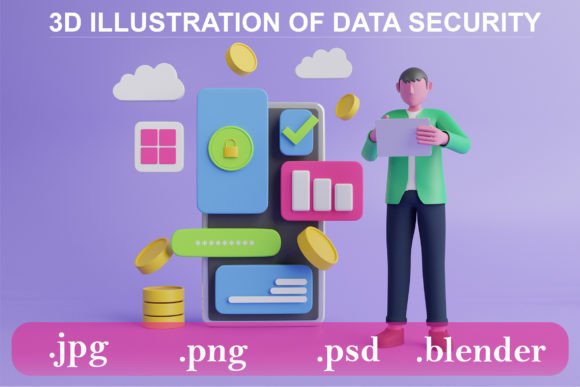
A 3D illustration of data security is a digital artwork created using 3D modeling software that visually represents elements related to protecting information. These illustrations often feature abstract shields, locks, servers wrapped in protective layers, or data streams flowing safely through secured channels. The use of depth, lighting, and perspective gives these visuals a realistic and dynamic quality that flat images cannot match.
Such illustrations are commonly available in multiple file formats — including JPG, PNG, PSD, and BLENDER — making them versatile for various design needs. The BLENDER format allows for full customization and animation potential, while PSD files support layered editing for graphic designers who want to tweak specific components.
Key Characteristics and Strengths
The strength of a 3D illustration of data security lies in its ability to communicate safety and protection in a visually appealing manner. Here are some notable features:
- Realism and Depth: Unlike traditional 2D graphics, 3D illustrations provide a lifelike feel that helps viewers grasp abstract concepts more easily.
- Customization Options: With access to editable formats like BLENDER and PSD, designers can adjust colors, shapes, and even animations to fit their brand or project needs.
- Visual Consistency: High-quality 3D models ensure consistent look and feel across different platforms and applications.
- Scalability: These illustrations can be scaled up or down without losing clarity, making them ideal for everything from small icons to large banners.
Why It Works for Communication
Data security is a technical subject, but it doesn't have to be dry. A well-crafted 3D illustration of data security transforms jargon into visuals that anyone can interpret. For example, showing a server protected by a glowing shield instantly conveys the idea of a secure system, which is far more effective than simply writing “data is secure here.”
Practical Applications Across Industries
These illustrations aren’t just eye candy; they serve real-world purposes across multiple domains:
For Websites and UI/UX Design
When designing a cybersecurity service website or app interface, integrating a 3D illustration of data security can help users quickly identify sections related to privacy, login, or account settings. In UI/UX, such visuals contribute to intuitive navigation and reinforce trust in the platform’s security measures.
Marketing and Promotions
Marketers often need to grab attention fast. A 3D illustration of data security used in social media ads, email campaigns, or print materials can stand out in a crowded space. For instance, a tech company promoting cloud storage solutions might use a shield-shaped logo with encrypted data flowing around it to highlight reliability and protection.
Education and Training Materials
Educators and trainers can leverage these illustrations to explain how data moves through a network, what happens during a breach, or how encryption works. Visual learning tools like 3D graphics make it easier for students to visualize and retain complex ideas. Think of a poster in a classroom showing a digital fortress with walls representing firewalls and locks symbolizing passwords.
Business Presentations and Reports
Entrepreneurs and business owners presenting to stakeholders or clients benefit from using 3D illustrations of data security to emphasize the importance of securing customer data. These visuals add a professional touch and help non-technical audiences understand the value of investing in cybersecurity infrastructure.
Poster and Print Design
Posters at trade shows or in office lobbies can use 3D illustrations to draw attention and deliver key messages about data protection. The dimensionality of the image makes it more memorable, especially when paired with clear, concise text.
Benefits of Using 3D Illustrations for Data Security
There are several tangible benefits to incorporating 3D illustrations of data security into your projects:
- Improved Brand Perception: Using high-quality, professional visuals signals credibility and expertise in handling sensitive data.
- Enhanced User Engagement: Users tend to engage more with content that includes dynamic and visually rich elements like 3D graphics.
- Increased Efficiency in Design: Pre-made 3D illustrations save time and resources compared to custom designs, allowing you to focus on other aspects of your project.
- Greater Flexibility: Formats like BLENDER and PSD allow for further manipulation, enabling designers to tailor the illustration precisely to their needs.
- Stronger Communication of Ideas: Abstract concepts like encryption or threat prevention become more accessible when shown through 3D visuals.
Realistic Use Cases
Consider the following scenarios where a 3D illustration of data security could be beneficial:
- Startup Website Launch: A new fintech startup uses a 3D illustration of data security in their homepage header to reassure users about financial data protection.
- Corporate Presentation: During a board meeting, a CTO uses a 3D illustration of data security to demonstrate how the company’s new firewall system works.
- Training Module for Employees: An HR department creates an internal training video with animated 3D illustrations to teach staff about phishing threats and secure password practices.
- Infographic for a Blog Post: A cybersecurity blogger enhances a post on endpoint protection by embedding a 3D illustration of data security to break up dense text and improve readability.
Choosing the Right File Format
Depending on your intended use, selecting the appropriate file format is crucial. Here’s a quick breakdown of common options associated with 3D illustration of data security:
| JPG | Ideal for web banners and backgrounds due to its compressed size and good color quality. |
| PNG | Best for transparency and clean lines, suitable for logos, icons, or overlays. |
| PSD | Offers layer-based editing for designers who want to modify individual elements of the illustration. |
| BLENDER | Provides full control over the 3D model, allowing for animation, scaling, and interactive elements. |
If you plan to animate the illustration or create variations, go with BLENDER. If you need something ready-to-use for a website or print material, PNG or JPG will suffice. For deeper customization, choose PSD.
Design Tips for Effective Use
To get the most out of a 3D illustration of data security, consider the following best practices:
- Use high-resolution versions for print or large displays to maintain visual integrity.
- Pair the illustration with clear, minimal text to avoid clutter and keep the focus on the message.
- Ensure color consistency with your brand palette to reinforce identity and professionalism.
- Test the illustration in different environments (e.g., mobile vs. desktop) to verify usability and appearance.
Where to Find and How to Use 3D Illustrations of Data Security
Many stock image platforms now offer 3D illustrations of data security in various formats. You can search for terms like “cybersecurity 3D,” “data protection visualization,” or “digital security illustration” to find relevant assets. When downloading, check the licensing to ensure it fits your usage — whether for commercial, editorial, or personal projects.
Once acquired, you can import the BLENDER file into your preferred 3D software to adjust angles, add motion, or integrate it into larger scenes. For those working in Adobe Photoshop or Illustrator, opening the PSD version provides access to each component for detailed edits.
Tools That Work Well with 3D Illustrations
Here are some popular tools that complement the use of 3D illustrations of data security:
- Blender: Open-source 3D creation suite for modeling, rigging, animation, and rendering.
- Adobe Photoshop: For editing and optimizing raster-based versions of the illustration.
- Canva: Great for placing the illustration into banners, presentations, or marketing templates.
- Sketch: Ideal for integrating the illustration into UI/UX mockups with ease.
Final Thoughts on Implementation
Using a 3D illustration of data security effectively means understanding not only the visual impact but also the context in which it's used. Avoid overcomplicating the design; keep it simple enough to be understood at a glance yet detailed enough to appear professional.
Also, consider accessibility — don’t rely solely on color to indicate security levels. Use labels or additional symbols if necessary. And always test the illustration in the final product to ensure it aligns with your overall design language and user experience goals.
Ultimately, a 3D illustration of data security is more than just a graphic; it’s a strategic asset that can build trust, simplify communication, and enhance the aesthetics of any digital or print medium. With the right approach, it becomes a powerful tool in your creative and professional toolkit.