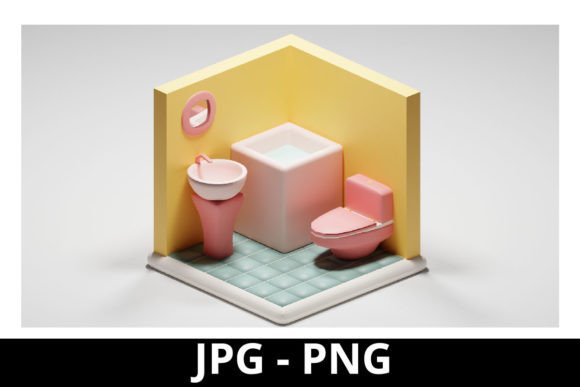
3D Rendered Isometric Cute Bathroom for Design Projects
The concept of a 3D rendered isometric cute bathroom has become increasingly popular among designers, marketers, and creative professionals who are looking to visualize spaces in a unique and appealing way. These types of renderings blend the charm of cartoon-like aesthetics with the precision of 3D modeling, making them ideal for both personal creativity and professional use. Whether you're working on an interior design project, creating content for a blog or social media, or simply exploring ideas for home improvement, understanding how these renderings can benefit your goals is essential.
What is a 3D Rendered Isometric Cute Bathroom?
A 3D rendered isometric cute bathroom is a stylized digital representation of a bathroom space using isometric projection. This technique shows all three dimensions—height, width, and depth—at equal angles, giving a clear and balanced view without perspective distortion. The “cute” aspect refers to the soft, playful, and often minimalist design elements used, such as pastel colors, rounded shapes, and clean layouts that evoke a sense of warmth and cleanliness.
These images are typically created using low-poly models, which simplify complex structures into geometric shapes for a more artistic and stylized look. The result is a visually engaging image that’s perfect for presentations, marketing materials, or even as inspiration for real-life renovations. A ZIP folder containing these assets might include JPGs, PNGs, and individual 3D objects like the bathtub, sink, toilet (WC), faucets, tiles, walls, and floor layout.
Why Different Audiences Care About It
While the term might sound niche, a 3D rendered isometric cute bathroom holds relevance across various fields and interests. Here's how different groups may find value in it:
Beginners and Hobbyists
For those just starting out in graphic design, architecture, or 3D modeling, these renderings offer an accessible entry point. The simplified, low-poly style makes it easier to understand spatial relationships and design components without overwhelming detail. You can experiment with arranging virtual tiles or changing the color of the cubicle to see how different choices affect the overall look of the room.
Practical example: A hobbyist blogger could use an isometric bathroom image to create a series of DIY tips for designing a small washroom. By tweaking the background or adding labels, they can make their content both informative and visually appealing.
Professionals and Entrepreneurs
Interior designers, architects, and business owners appreciate the clarity and scalability of isometric views. They can be used in client proposals, product showcases, or website mockups to present ideas in a clean, modern format. The “cute” aesthetic especially appeals to brands targeting younger audiences or promoting eco-friendly, minimalist products.
Practical example: An entrepreneur selling modular bathroom furniture might use a 3D isometric rendering to show how each piece fits together in a variety of setups, helping customers visualize the product in their own homes before purchase.
Marketers and Bloggers
Visual storytelling is key in digital marketing. A 3D rendered isometric cute bathroom provides a ready-to-use asset that stands out on websites, social media, or promotional emails. The isolated nature of these designs means they can be easily layered or edited to match branding guidelines or seasonal themes.
Practical example: A lifestyle brand could feature a bright pink tub in an isometric setting for a Valentine’s Day campaign, using the same base image but swapping out colors and accessories to maintain visual consistency across posts.
Educators and Students
In academic settings, isometric renderings serve as excellent teaching tools. They help students grasp architectural concepts, such as layout planning and spatial awareness, in a less intimidating and more interactive format. Educators can use these visuals to demonstrate how different elements contribute to a functional and attractive bathroom design.
Practical example: A design class might assign students to modify an existing isometric bathroom model by adjusting lighting, fixtures, or tile patterns. This hands-on approach helps learners understand the impact of each decision on the final outcome.
Priorities and Use Cases Across Audiences
Depending on your role or interest, certain priorities will come into play when considering the use of a 3D rendered isometric cute bathroom. Let’s explore how different aspects might matter to you:
- Quality: For professionals presenting to clients, high-resolution JPGs and PNGs ensure the design looks polished and credible.
- Speed: Marketers often need assets quickly; pre-rendered isometric images save time compared to building from scratch.
- Flexibility: Creators who want to customize their designs may prefer editable 3D files or transparent backgrounds for easy integration into other projects.
- Cost: Small business owners and freelancers might look for affordable packages that include multiple bathroom components, such as sink sets or WC units, to maximize value.
- Learning Value: Educators and self-learners benefit from seeing how elements like wall placement or tile textures influence the final look of a space.
- Commercial Value: Real estate agents or property developers might use these renderings to highlight the potential of a new bathroom layout during virtual tours or brochures.
How to Choose the Right Set for Your Needs
When selecting a 3D rendered isometric cute bathroom package, consider what you’ll do with it. If you’re a beginner, look for kits with basic elements and user-friendly formats. If you're a professional, prioritize high-quality textures and accurate proportions.
Also, check whether the set includes individual objects like the faucet or bathtub. This flexibility allows you to mix and match components, tailoring the scene to fit your specific vision. For instance, a designer working on a hotel renovation could replace the default toilet with a luxury model to better represent the target clientele.
Real-Life Applications and Benefits
Beyond aesthetics, 3D isometric renderings offer practical advantages. Their flat perspective allows viewers to assess the layout and functionality of a space at a glance. This makes them particularly useful for:
- Home Renovations: Planning the placement of a bathtub or sink becomes easier with a clear overhead view.
- Product Packaging: Showcasing bathroom accessories in an inviting environment can boost sales by highlighting their use case.
- Virtual Tours: Adding isometric bathrooms to digital walkthroughs gives potential buyers a quick yet comprehensive idea of the space.
- Content Creation: Bloggers and influencers can repurpose these images for tutorials, comparisons, or mood boards with minimal effort.
Additionally, because these renderings are often isolated against plain backgrounds, they can be adapted for print or web use without requiring extensive editing. This is especially valuable for educators or publishers who need consistent imagery for textbooks or online courses.
Maximizing Long-Term Use
If you're investing in a ZIP folder of 3D rendered isometric cute bathroom assets, think about how versatile the files are. Sets that include multiple versions—like different tile options or bath configurations—can be reused in future projects, saving time and money. Look for collections that support common design software or allow layering in Photoshop for added customization.
Consider also the file formats included. While JPGs are great for quick sharing, PNGs with transparent backgrounds give you more control over the design. Including 3D object files opens up possibilities for animation or interactive content if your platform supports it.
Is This the Right Fit for You?
To determine if a 3D rendered isometric cute bathroom aligns with your goals, ask yourself a few questions:
- Do I need to visualize a bathroom design quickly and clearly?
- Am I targeting a market that values modern, clean, and appealing aesthetics?
- Will I benefit from having flexible, reusable assets for multiple platforms?
- Are my users or audience likely to respond positively to a stylized, non-realistic design?
If you answered yes to any of these, then this type of rendering could be a valuable addition to your toolkit. Whether you're illustrating a design blog post, crafting a presentation for a client, or experimenting with your own layout ideas, the isometric cute bathroom offers a blend of form and function that caters to a wide range of needs.
Getting Started: Tips for New Users
If you're new to using 3D rendered assets, start simple. Download a sample ZIP folder and open one of the PNG files in your preferred design software. Try placing it on a white background or overlaying it with text to test its usability. As you grow more comfortable, you can explore combining objects or adjusting lighting and color schemes to suit your project’s theme.
Remember, the goal is not just to showcase a bathroom but to tell a story through design. Whether you're emphasizing cleanliness, modernity, or whimsy, the right isometric image can help you communicate your message effectively.
Final Thoughts
From beginners to seasoned professionals, a 3D rendered isometric cute bathroom serves as a bridge between imagination and execution. Its balance of simplicity and detail makes it a powerful tool in various contexts—from educational materials to commercial branding. When choosing your set, focus on quality, flexibility, and alignment with your specific use case. With the right assets, you can bring your bathroom design ideas to life in a way that’s both efficient and charming.